Cleaning services in Leeds - West Yorkshire. Methods, access and the proposed scope assessed for your property.
Commercial kitchen deep cleaning for Leeds food businesses
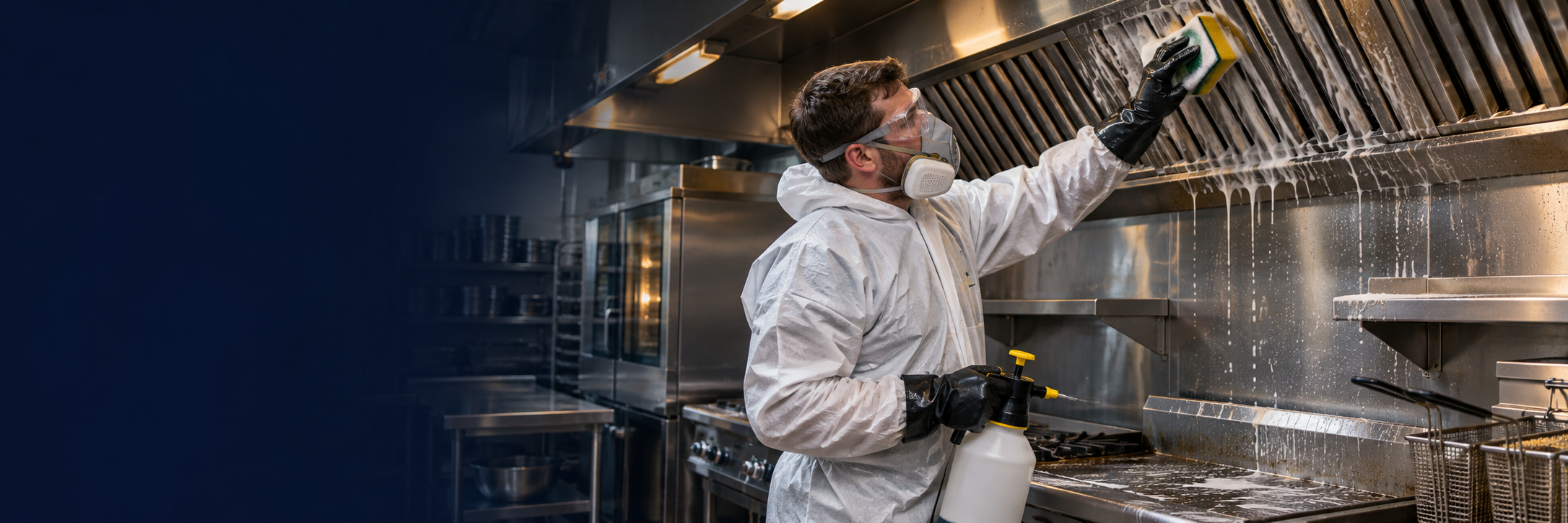
Commercial kitchen deep cleaning in Leeds needs to fit the equipment, the deposits and the way the premises operate. A restaurant may need accumulated grease removed during an agreed shutdown, while a café may be preparing its kitchen for a new operator. Nova Clean Leeds discusses the actual areas requiring attention before proposing a cleaning scope. Accessible equipment, washable finishes, floors and selected overhead surfaces can be assessed together, with their preparation and treatment requirements identified separately. A deep clean should support the operator’s hygiene arrangements without being confused with appliance servicing, pest treatment or an inspection guarantee.
Give the Leeds postcode, the approximate kitchen size, an equipment list and photographs of the main concerns. Explain the opening hours and the time available for preparation, cleaning, drying and checks before reuse. In a compact takeaway, access around connected appliances can be more demanding than the floor area suggests. In a larger catering operation, contractor induction, stock protection and the coordination of several trades can determine the programme. Scope, price and availability are confirmed for the particular premises.
Agree which kitchen surfaces and equipment are included
The written specification should identify the equipment and surfaces to be cleaned, including their accessible interiors where appropriate. Appliance exteriors, removable shelves, storage areas and the floor beneath movable equipment are distinct tasks. Ask what preparation is required from the operator and what cannot be accessed. A general description such as kitchen cleaning can conceal important differences between quotations. It should be clear whether the proposed work covers only open surfaces or extends to particular components and areas that need additional preparation.
Extraction requires especially clear boundaries. The visible canopy, removable grease filters, internal ductwork, fan and discharge point form different parts of the system. Cleaning the accessible canopy does not mean that the whole extraction route has been treated. If a landlord, insurer or maintenance manager requires a particular specification or documentary record, raise that requirement before booking. Any inaccessible sections should be identified rather than assumed to be included in a broad description of the intervention.
Prepare food, utensils and stock before cleaning begins
Food, packaging and utensils need suitable protection or removal from the working area. The operator should agree how refrigerated and frozen products will be stored while equipment is unavailable. A cleaning appointment is not a substitute for the business deciding how its food safety controls will be maintained during a shutdown. Confirm who will empty appliances, manage stock and authorise their return to use. These practical responsibilities should be settled before the intervention, particularly when the kitchen must reopen for a scheduled service.
Electrical, gas and other isolation requirements also need planning. Equipment should be made available under an appropriate procedure, with a competent person handling any disconnection or technical work outside the cleaning scope. A cleaning team should not be expected to disturb a gas connection or remove a safety guard without the necessary competence and authorisation. Tell us which appliances are fixed, which can be moved safely and which have manufacturer restrictions. Heavy equipment must not be dragged across a floor simply to reveal the area behind it.
Remove grease without damaging stainless steel and sensitive finishes
Professional kitchens contain materials with different tolerances: stainless steel, aluminium, painted metal, ceramic tile, sealants, plastics and sometimes natural stone. A degreaser appropriate for one material may be unsuitable for another. Treatment therefore needs to account for both the deposit and the underlying finish, together with any available care instructions. Abrasive tools can leave scratches, while an unsuitable chemical can discolour a surface or attack a coating. Where the finish is uncertain, a discreet trial area can help establish an appropriate method.
Effective grease removal depends on a controlled combination of a suitable product, contact conditions and physical action. Increasing concentration or working more aggressively does not automatically improve the result. Products must be used according to their instructions and the assessed risks. Food contact surfaces require a suitable finishing process before reuse, including any necessary rinsing and subsequent treatment. Cleaning tools and residues should be managed so that work on a heavily affected appliance does not contaminate surfaces that have already been prepared.
Assess ovens, cookers and equipment with baked-on deposits
Heat can change food and grease residues into deposits that behave differently from ordinary surface soil. Before treatment, the assessment should establish the appliance type, the condition of its finish and which components can be safely removed. Controls, seals, heating elements and electrical parts may impose restrictions on moisture or chemical exposure. Providing the model and any manufacturer care information can help avoid inappropriate assumptions. An appliance that looks robust from the outside may still contain vulnerable components that require a carefully limited cleaning method.
Fryers need particular preparation concerning cooling, used oil and the handling of residues. Confirm who will drain the appliance and arrange the appropriate collection of waste oil. Neither used oil nor concentrated food debris should be treated as ordinary wash water. A cleaning specification should not quietly transfer the disposal problem into the drainage system. The quotation should explain the expected preparation, the parts of the fryer included and any limitations affecting the proposed treatment or return to use.
Distinguish canopy and filter cleaning from complete extraction work
A canopy can collect grease on accessible surfaces and removable filters, making those components a relevant part of a deep cleaning enquiry. The wider extraction system may pass through ceilings, risers or external sections that are not visible from the kitchen. Where complete extraction cleaning is required, the route and access provisions need separate consideration. The person arranging the intervention should establish what maintenance information is available and who controls access beyond the immediate kitchen, especially in shared commercial buildings.
Do not assume that an ordinary deep cleaning invoice provides certification for every section of an extraction installation. If evidence of a specific inspection or treatment is required, ask exactly what it covers and who is competent to provide it. Cleaning also cannot repair a failed fan or correct an inadequate ventilation design. Any defect or inaccessible section should be recorded clearly so the operator can arrange the appropriate follow-up. The aim is a reliable account of the completed work, rather than a certificate whose scope is unclear.
Clean floors, joints and accessible areas beneath equipment
Kitchen floors can hold grease in textured finishes, around equipment feet and at the junction between the floor and wall. The construction and condition of the surface determine how it can be treated. Loose coverings, damaged grout or failed seals may limit water use and agitation. A machine that suits an open floor may be inappropriate in a confined area or on a weak finish. The assessment should also consider drainage and how residues will be collected without spreading water into adjoining occupied spaces.
Slip control is needed during cleaning and drying. Staff routes should be coordinated so people do not pass through a working area without suitable arrangements. Completion of the visible cleaning does not necessarily mean a floor is ready to reopen if moisture or residues remain. Permanent wear or damage to a non-slip finish may affect its condition after removable dirt has been addressed. Those issues need to be distinguished from recoverable soiling, with repairs or another assessment identified where necessary.
Include shelves, washable walls and high-level features where appropriate
Surfaces above and beside the main preparation area can be difficult to address during a busy service routine. Depending on the agreed scope, accessible shelving, washable wall finishes, door frames and suitable overhead features can be considered. Their height, condition and position affect the working method. A high ledge above equipment is not simply another horizontal surface: the area beneath it needs appropriate preparation before deposits are disturbed. Access arrangements should protect both the people carrying out the work and the kitchen below.
Cold rooms and refrigeration equipment also need coordinated emptying, treatment and drying. The method should protect seals, controls and other sensitive components while addressing the agreed surfaces. Persistent condensation, damaged linings or recurring marks may require maintenance investigation alongside cleaning. Explain the operating constraints before booking so appropriate product storage and time for the equipment to return to its intended condition can be planned. A clean cannot resolve a continuing refrigeration defect simply by removing its visible effects.
Understand what cleaning and disinfection each contribute
Removing grease and food deposits is different from applying a disinfectant for a defined purpose. A product should not be assumed to work effectively through a heavy layer of residue. Where disinfection is included, the treatment needs to be suitable for the intended application and used under the relevant instructions, including contact conditions and any required rinse. The operator should know which surfaces are treated and how they are prepared for reuse. A strong fragrance or a bright finish does not demonstrate microbiological performance.
If verification or sampling is required, its scope should be agreed separately and the result interpreted by a competent person. A general kitchen cleaning record is not a universal declaration about every food safety risk. The record can document the intervention, while the operator’s wider management arrangements determine other controls. State any audit or internal documentation requirements during quotation so the proposed cleaning and the evidence expected can be assessed together before work starts.
Schedule the work around Leeds catering operations
A city-centre restaurant may have a restricted loading window and nearby occupiers to consider. A café in Headingley may have limited space for equipment, while a managed catering premises in Hunslet may require induction and approval of the working method. These differences affect the programme. Explain service hours, deliveries, waste collection and the time by which the kitchen must be available. The person providing access should understand the agreed boundaries and know who can resolve questions about appliances or building facilities.
Work outside operating hours can be discussed, with availability confirmed for the proposed date. Allow for preparation, cleaning, drying, any separate technical work and the checks required before reopening. Booking only the visible cleaning period can leave insufficient time for the complete sequence. Where several contractors are involved, nominate a contact who can coordinate instructions and approve any agreed variation. The cleaning programme should follow the actual readiness of the kitchen rather than an assumption that all other work will have finished.
Compare quotations by their inclusions and practical assumptions
Cost depends on the layout, equipment, deposit level, accessible areas and timing. High-level work, removable components, drying requirements and agreed waste handling can also affect the intervention. A heavily affected compact kitchen may require more labour than a larger room maintained under a thorough daily routine. A useful quotation identifies the surfaces and equipment included, any preparation by the operator and the circumstances in which a further assessment or revised scope may be necessary.
Ask whether appliance interiors, filters, cold rooms, storage areas and floors beneath movable equipment are included. If an appliance cannot be moved or safely isolated, that limitation should be recorded. Repairs, pest treatment, gas servicing and electrical work remain distinct scopes unless expressly arranged through an appropriate contractor. Cleaning can remove recoverable deposits and improve the condition of agreed surfaces; it does not make worn equipment new or guarantee a particular food hygiene rating.
Request an assessment for your Leeds commercial kitchen
Prepare photographs of the room and the main deposits, an equipment list and a preferred working window. Include the postcode, approximate dimensions, available utilities and details of stairs, parking and access restrictions. Do not move heavy connected appliances or remove guards to obtain a better photograph. A clear description of an inaccessible area is more useful than an unsafe attempt to expose it. Nova Clean Leeds can then discuss the information needed to establish an appropriate scope.
Enquiries can cover Leeds and surrounding communities including Holbeck, Hunslet, Headingley, Chapel Allerton, Roundhay, Horsforth, Morley and Garforth, with coverage confirmed individually. At handover, compare the completed work with the specification and note exclusions, permanent damage and recommendations for another trade. Keep the cleaning record alongside relevant maintenance information. It provides a practical basis for future work and helps everyone responsible for the premises understand what has been addressed.
Discuss your Leeds cleaning requirement
Send the postcode, photographs taken safely and a description of the affected surfaces. We will discuss access, the work required and availability before confirming the next step. A quotation should identify what is included, any separate specialist work and the assumptions on which the price is based.
Request a cleaning quote0845 52 805 20