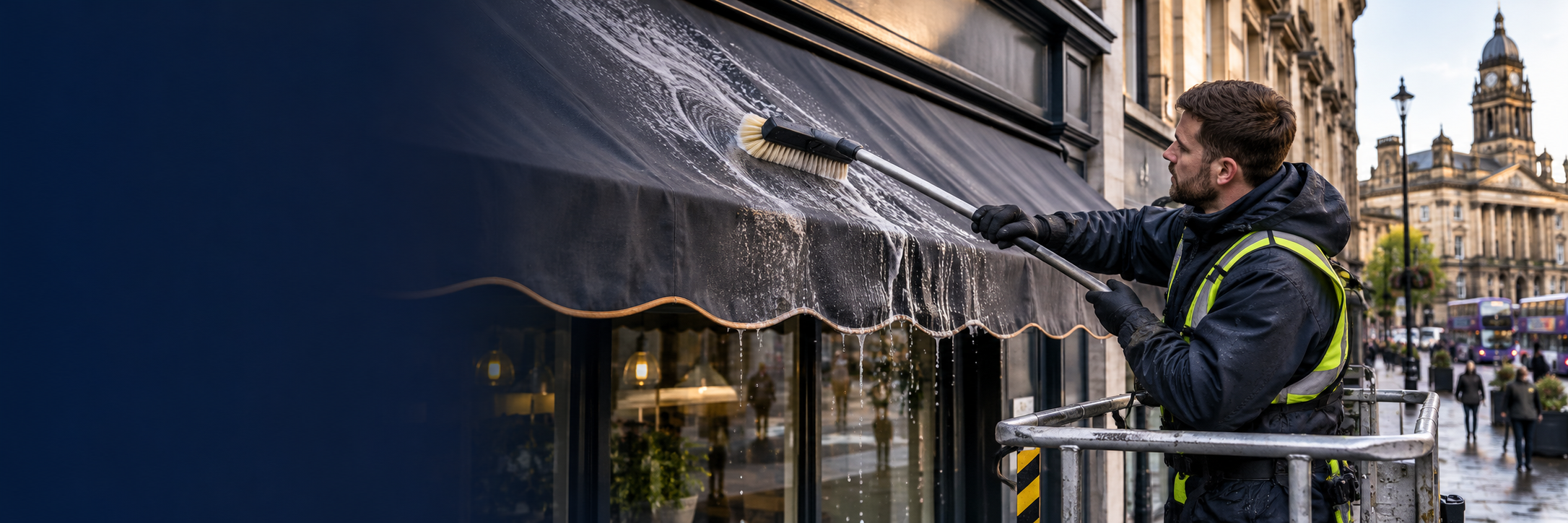
A cleaning brief for shopfronts, covered seating and patio awnings, shaped by the fabric, its fittings and the site.
Nova Clean Leeds · West Yorkshire
Awning and canopy cleaning in Leeds for retractable fabrics, shopfronts and outdoor seating
A shop awning can look clean from its own doorway while the leading edge is marked on the street side. A residential canopy may have a dark band where it was rolled away damp, with loose deposits elsewhere. On a restaurant terrace, the immediate question could be whether the fabric and valance can be cleaned without leaving water across the entrance or dripping onto adjoining tables. Nova Clean Leeds discusses awning cleaning with the construction, access and surroundings in mind. The work can be planned around the actual covering and its condition, including differences between the top, underside, edges and any printed areas.
Send photographs from ground level, including a view of the whole installation and its position above the pavement, terrace or doorway. Give the Leeds postcode, approximate width, kind of awning and anything you know about the textile or coating. Mention whether it retracts, has a removable valance or is stretched over a frame. If the structure appears loose, the mechanism has become unreliable or a seam is tearing, share that information before anyone opens the awning for inspection. The building owner or its awning contractor should deal with concerns about operation and integrity.
Identify the cover, coating and any printed branding before cleaning
There is no single fabric used in every canopy. Dyed acrylic textiles, coated polyester and other coverings can have different limits on cleaning products, friction and wetting. A retractable awning might have a water-repellent finish, whereas a fixed canopy may have a coated surface designed to be maintained differently. Colour and surface texture give clues, but an installation label, retailer invoice or original care instructions are more informative. If there are two canopies that look identical, check whether one was recovered more recently or had its valance replaced.
Take particular care to identify printed logos, applied lettering and separate trims. A shop name can be printed directly onto the fabric, applied to a panel or placed on a valance that uses a different material. A suitable treatment for an unprinted section might affect the appearance of the graphic. Old lettering may show a ghost image when it has already faded or has been removed. If the design is important to the appearance of your business, explain which parts must be assessed and whether you have maintenance guidance for the printed area as well as the main cover.
Read the pattern of fouling before deciding what can be lifted safely
Much of the deposit on an awning starts as loose dust, fine leaf debris or material blown along a street. On the exposed edge, rain can carry it towards the valance, where it may build up into dark lines. Greasy airborne soil near a busy service area can attach more strongly, and a sheltered area underneath the awning may look very different to the top. Enquiry photos should show whether the mark is concentrated by a seam, follows a fold or appears around a neighbouring building feature such as a gutter. This helps establish the likely source and where the first assessment should take place.
If fabric has remained damp after being rolled or if there is growth on accumulated dirt, say how long it has been happening and whether there is a leak or repeated dripping from above. A textile can retain a shadow after soil has been lifted because the underlying fabric has already changed. A test area can be useful when the effects on colour and coating are uncertain. If the awning is affected by substantial bird fouling, describe the area from a safe distance and discuss whether a separate pigeon guano removal assessment is needed before treatment of the textile can proceed.
Plan where the team can work around the frame and any live entrance
The height of the awning is only one part of the access decision. The ground beneath it may slope or include steps, a kerb, planters or outdoor furniture. Safe working access also depends on the position of glass, signs, electrical equipment and the people likely to pass below. Where possible, discuss whether the affected surface can be reached from safe ground-level positions or whether another suitable plan is needed. Give us the height and projection from existing records or a safe estimate. A wide photograph gives more usable information than an image taken from a ladder.
For a ground-floor shop in Leeds city centre, a team may need to account for adjacent shopfronts, deliveries and an entrance that opens directly onto a busy pavement. A restaurant near the Calls or Granary Wharf may have a large outdoor seating area with several retractable units above shared routes. The building manager can identify the times when the area can be closed, how the public will be kept clear of work and who can authorise access. A residential canopy in Horsforth may be reached through a side gate, with fewer pedestrians but less room to place equipment. Flag each constraint during the quotation.
Agree who can operate the awning and how the surrounding area will be protected
A motorised or manually operated awning has moving components that need to be managed by the responsible person. Give us the model if known and say who is authorised to operate it. If a remote control, wind sensor or shared system affects the way it opens, raise that before access is arranged. Avoid asking for a clean to proceed on a unit that will not extend normally, has visible damage or cannot be held safely in the required position. Repairs, adjustments and electrical maintenance need their own assessment by the appropriate specialist.
Consider what lies beneath, where cleaning water could go and what needs to remain dry or in service. Outdoor furniture, signs, glazed displays, light fittings and adjoining entrance mats may need to be moved or protected. For an upper-level installation or a canopy beside another unit, ask the building manager about drainage and any restrictions on runoff. A plan for the building is as important as the choice of fabric treatment. Include details of any shared paths or doorways, and make clear who is responsible for allocating and clearing the working area.
Clean using a method appropriate to the textile and finish
The assessment may begin with removal of suitable loose material from the accessible area, then move to more specific treatment after checking the manufacturer’s guidance and the condition of the textile. Methods can vary according to whether the covering is woven, coated or printed, and the work must stay within what the fabric, seams and frame can tolerate. Aggressive friction or high pressure can damage vulnerable coverings and weathered stitching. If a discreet test is possible, compare the result with the rest of the fabric and agree how much improvement is realistic before treating a prominent area.
If some dirt is centred on the valance or underside, specify those areas so the cleaner can assess them as separate surfaces. On fixed structures, some parts may only be accessible under a different work arrangement. A free-hanging valance can have folds that hold moisture or a reinforced edge with requirements of its own. Ask what can be covered in the proposed visit, whether the fabric needs to remain in place for the entire treatment and whether any components would require someone qualified to remove or refit them.
Set a suitable weather and drying window before reopening the area
Exterior fabric is exposed to the weather throughout treatment and drying. Wind can change the way a retractable awning behaves and where droplets land. Rain can bring new dirt onto a surface and change the practical time available before it can be put away. Weather, access, the textile and the care instructions should all inform the timing. Ask what happens if the weather changes, especially when the canopy is meant to be extended only under certain conditions. Give a practical time window and identify the person who can make a decision on the day.
Many awning care instructions call for allowing the fabric to dry before it is retracted or covered. Follow the instructions for the exact installation and agree who will check that it is ready before it is returned to its usual position. If your business needs to open earlier than the awning can be used, consider whether the frontage can be kept available while the agreed fabric and any affected walking surfaces dry. In a shared building, pass the timing to reception, the duty manager or the tenant operating the awning so separate teams are working from the same arrangement.
Price the canvas and access requirements in the same written scope
A quotation depends on width and projection, the number and position of units, their fabric, the soil and how much of the canopy can be reached. The scope may cover the accessible face, leading edge and valance, with separate consideration for the underside or frame. A small canopy over a frequently used doorway may take more coordination than a larger one in a private courtyard. Provide measurements from installation records if available and show whether there are several bays at different heights or adjacent signs that affect access.
Ask who will prepare the area, manage use of the frontage and remove furniture or other items. Clarify whether a weather-related return is likely and how uncovered parts of the arrangement will be handled. If you also need the fixed glass assessed, see window cleaning in Leeds and describe which panes sit behind, beside or below the canopy. A separate specification for each surface helps you check the estimate and prevents water, recently cleaned glass or a freshly treated textile from complicating the other part of the work.
Check the appearance from useful positions and pass on the care requirements
Review the awning once the condition can be judged under ordinary lighting, from the way customers approach the property and from the positions stated in the quote. A seam, stitched edge or area that has faded may look different to the surrounding cover. Record any defect or change noted during the visit, including cracked fabric, loosened stitching or damage identified before work. If you see a persistent mark, ask whether it is residual material, staining in the fabric or a change to the surface. This distinction helps decide how to maintain the unit or whether to consult its supplier.
As a planning example, a café flagging a dark front edge and several marks around a printed name can send photos showing access to the canopy, its brand and the hours the seating is unused. An initial assessment can focus on whether the fabric and lettering are compatible with the proposed treatment. The manager can arrange an uninterrupted period for access, drying and a review from the pavement. The same conversation can work for a house in Roundhay with a retractable patio awning, where the priorities may be the fabric near the front bar and keeping runoff clear of the back door.
Enquire about awning or canopy cleaning in Leeds and the surrounding area
Nova Clean Leeds discusses awning cleaning in Leeds city centre, Holbeck, Headingley, Kirkstall, Horsforth, Roundhay, Pudsey, Morley and nearby areas. Send the postcode, approximate dimensions, frame type, any care information and ground-level photographs. Note whether the property is a home, shop, hospitality venue or managed building, and tell us which areas are busiest during the day. Existing defects, restrictions on access and whether the awning must be ready for a specific event or reopening all make a difference to the brief.
If the surrounding terrace also needs attention, describe the floor or drainage concerns separately and consult our balcony and terrace cleaning service. Explain whether runoff from one part of the work could affect the other and who oversees access to each area. With those details, the work can be scoped around the textile as well as the building that supports it, and scheduled at an appropriate time for the people working in or using the area.
Request a quotation from Nova Clean Leeds
Send the postcode, photos and any care instructions or details that will help us assess the work.
Request a cleaning quote0845 52 805 20